Your smartphone likely serves as your communication hub, your primary camera, and your portable gaming console. Now, that same device in your pocket holds the power to overhaul your living environment completely.
Interior design used to require expensive consultations, fabric swatches, and a lot of heavy lifting. Today, advanced artificial intelligence and machine learning algorithms accessible via Android and iOS devices handle the heavy lifting digitally. Your handheld device can now become your go-to interior designer, but it’s up to you to learn how. Here’s a look at how to leverage AI on your phone to redesign your home.
Create Digital Twins With LiDAR and AR
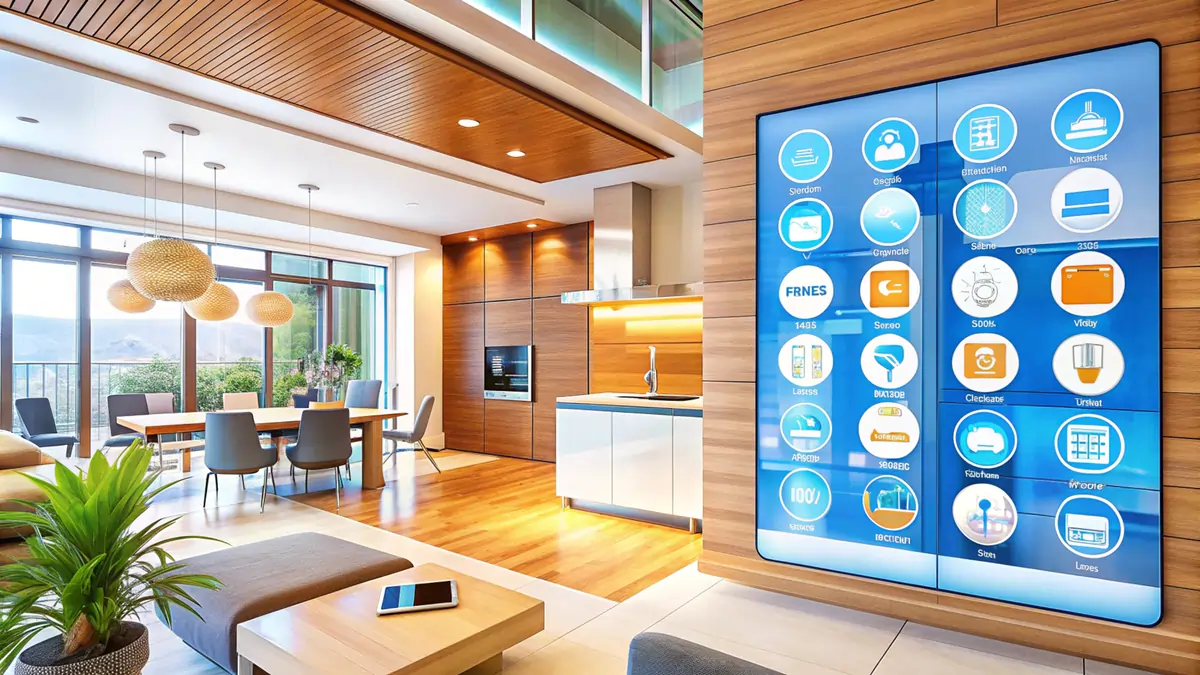
The first step in any redesign involves understanding the space you possess. Tech enthusiasts already know about LiDAR (Light Detection and Ranging) sensors present in many modern flagship phones. These sensors measure the time it takes for light to reflect off objects, creating a precise depth map of your surroundings.
AI-powered apps use this hardware to scan your room in seconds. You simply stand in the center of the room, pan your camera around, and the software stitches together a 3D model. This digital twin serves as your sandbox. You effectively capture accurate measurements of every wall, window, and doorway without ever touching a tape measure.
Generative AI for Instant Style Swaps
Perhaps you know your room needs a change, but you lack a specific vision. Generative AI solves this creative block instantly. We have seen what tools like Midjourney or DALL-E do for 2D art; mobile design apps now apply similar logic to your physical environment.
You snap a photo of your current living room, upload it to an AI design app, and select a style prompt. You might choose Mid-Century Modern, Cyberpunk Industrial, or Scandinavian Minimalist. The AI processes your image, identifying structural elements like walls and floors while distinguishing movable objects like couches and tables.
It then overlays the new aesthetic onto your existing room geometry. You see your actual room, with your specific lighting conditions, transformed into a completely different style. The AI preserves the structural integrity of the photo while swapping out textures, colours, and furniture assets. You generate dozens of iterations in minutes. This allows you to experiment with bold choices—such as a dark accent wall or neon lighting—without buying a single can of paint.
Virtual Staging and Scale Accuracy
One of the biggest pain points in furniture shopping involves scale. An item often looks perfect in a showroom or on a website, but it dominates the space once you get it home. Augmented Reality (AR) eliminates this risk.
Retailers and standalone design apps leverage AR to project 3D models of furniture into your room through your camera viewfinder. The AI anchors the digital object to the floor, ensuring it scales correctly as you move your phone closer or further away. You walk around the virtual chair or table to see how it affects traffic flow.
This technology helps you determine fit and placement before you spend money. You verify that the walkway remains wide enough or that the coffee table sits at the right height relative to the sofa. You also ensure you choose the right dresser for your room by projecting different models against the wall to see which dimensions balance the space best. The software handles the spatial reasoning so that you only have to focus on aesthetic appeal.
Intelligent Colour and Lighting Analysis
Lighting defines a room’s mood, but it also changes how paint colours appear. A shade of blue that looks calming in the store might look cold and gray under your home’s LED bulbs. AI tools on your phone help you navigate colour theory with precision.
You use your camera to sample colours from objects you already love, such as a piece of artwork or a rug. The AI analyzes pixel data to determine the exact hex codes and generates complementary colour palettes. It suggests accent colours that mathematically harmonize with your baseline.
Some advanced apps also simulate lighting conditions. You tell the AI where your windows sit and what direction they face. The software then renders how specific paint colours will look at different times of day, from morning sun to evening artificial light. You can visualize the result before you commit to a pigment full of regret.
Organize the Project With Smart Lists
Redesigning your home requires logistics. AI assistants integrate into project management apps to keep your renovation on track. These tools analyze your generated designs and create shopping lists automatically.
If the AI suggests a specific look, it often identifies similar real-world products available for purchase. It scans the web for the best prices on those items, tracks your budget, and estimates delivery times. You manage the entire workflow from a single dashboard.
Using these tools streamlines the chaos of renovation:
- Budget Tracking: The AI alerts you if a specific furniture choice pushes you over your set limit.
- Timeline Management: It schedules tasks, reminding you to order paint before the furniture arrives.
- Product Sourcing: It uses visual search to find cheaper alternatives to expensive designer pieces you uploaded.
- Contractor Coordination: Some platforms connect you with local professionals if the job requires electrical or plumbing work.
Integrating Smart Home Tech
Since you read AndroidCrunch, you likely care about home automation. Redesigning offers the perfect opportunity to integrate smart home devices, and AI helps plan this ecosystem too.
When you map your room, AI tools suggest optimal placements for smart speakers, mesh Wi-Fi nodes, and security cameras to ensure maximum coverage. They analyze the room’s acoustics to tell you where to place a soundbar or subwoofer. You visualize where cables need to run and where to install smart switches.
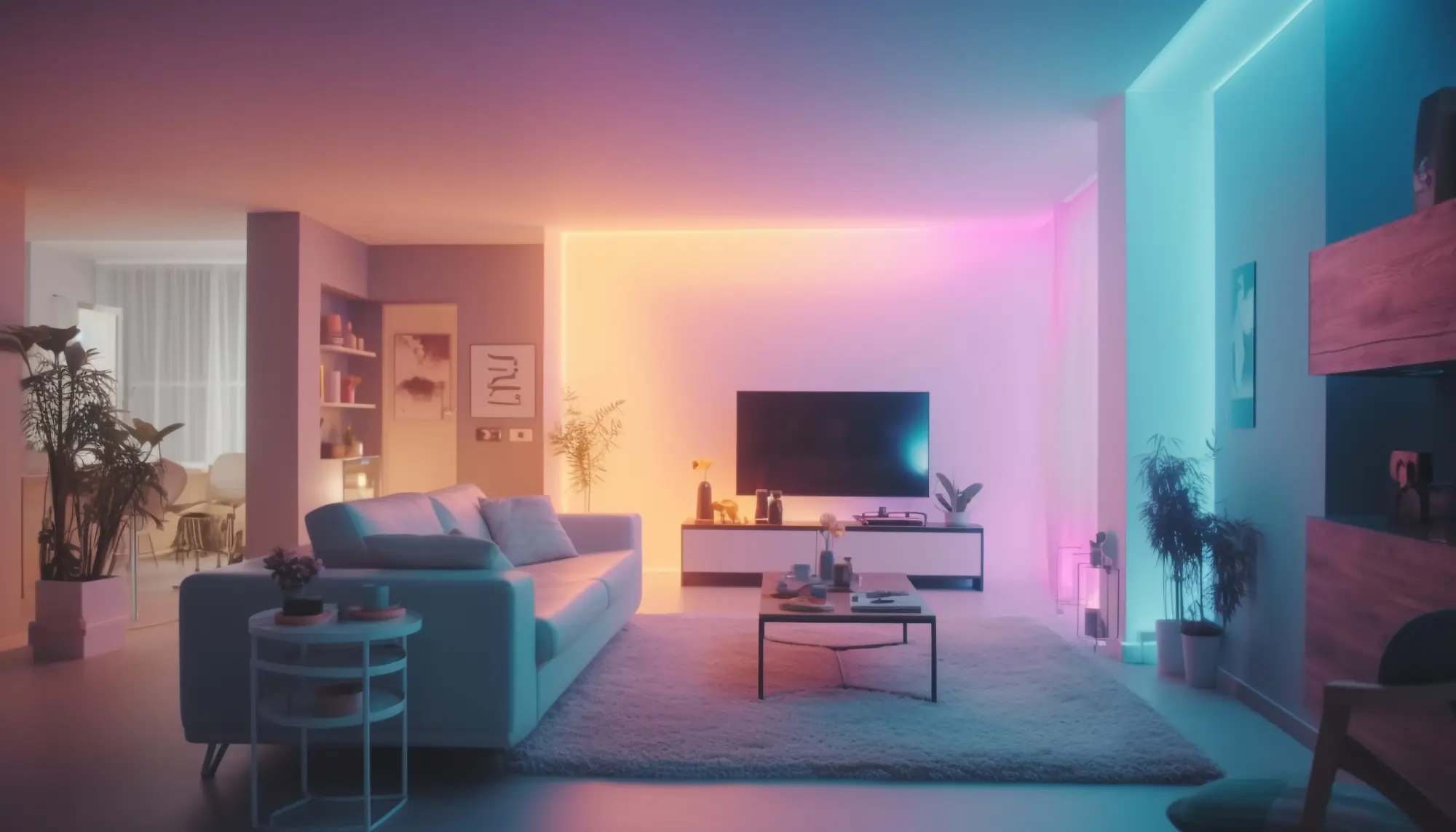
You essentially build a tech-forward layer into your design plan from day one, rather than trying to retrofit gadgets into a finished room. The AI considers the location of power outlets and the range of your connectivity hardware to optimize your smart home performance.
The Future of Mobile Design
The capabilities of mobile AI expand with every processor generation. As neural processing units (NPUs) in smartphones become more powerful, we will see even faster, more realistic real-time rendering. We expect future updates to include physics simulations, letting you see how a curtain blows in the wind or how a specific fabric wrinkles.