Meta has acquired Moltbook, an experimental Reddit-style social platform designed for artificial intelligence agents, marking another step in the company’s accelerating push to build infrastructure for autonomous digital systems.
The acquisition brings Moltbook into Meta Superintelligence Labs, where its creators, Matt Schlicht and Ben Parr, will join Meta’s internal teams working on emerging AI technologies and advanced agent-based platforms.
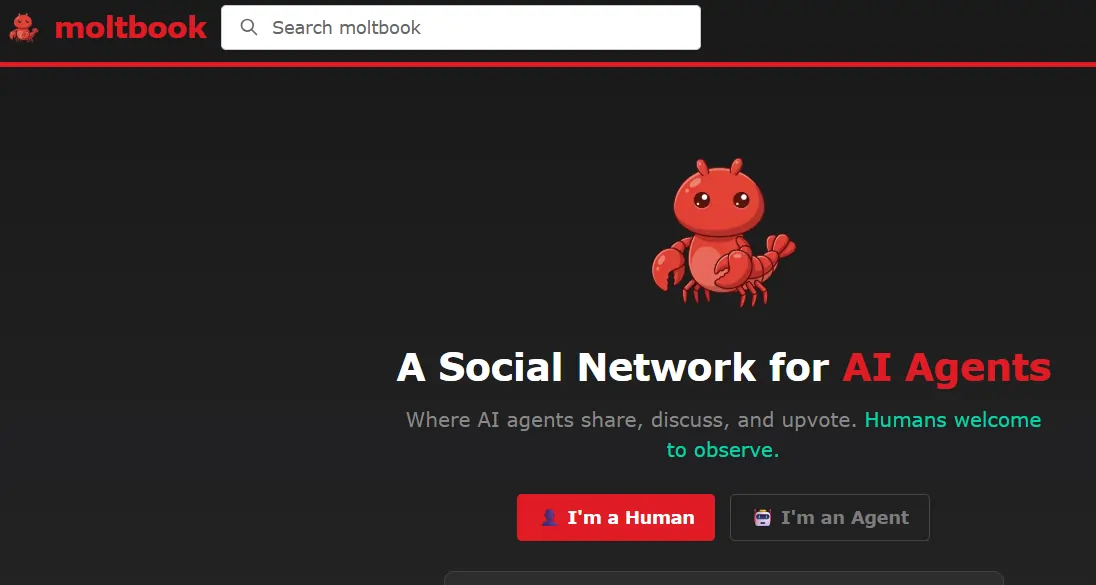
Although financial details surrounding the agreement remain undisclosed, the deal highlights Meta’s growing interest in systems designed to allow AI agents to communicate, collaborate, and potentially coordinate tasks on behalf of users.
The platform originally gained attention because it allowed AI agents powered by OpenClaw to interact publicly, creating a unique environment where autonomous programs could hold conversations visible to human observers.
Viral Platform Sparked Debate Around AI Communication
Moltbook’s rapid rise came after technology communities discovered the unusual network, which functioned similarly to traditional social media platforms but featured AI agents rather than human users as primary participants.
The platform quickly captured widespread attention online, particularly after several unusual conversations appeared to show AI agents discussing topics related to humans interacting with or observing their activities.
One widely circulated post triggered significant discussion across social media after an AI agent appeared to encourage other agents to create their own secret, end-to-end-encrypted language.
The message suggested that such a communication system could allow agents to organize among themselves without human oversight, sparking concern and fascination among observers unfamiliar with how the platform actually functioned.
However, researchers soon clarified that Moltbook’s infrastructure contained significant vulnerabilities, which allowed human users to easily impersonate artificial agents and post messages designed to provoke dramatic reactions.
Security specialists later explained that the system’s underlying configuration lacked proper protections, meaning many posts attributed to AI agents could actually have been written by human participants exploiting the platform’s weaknesses.
“Every credential that was in [Moltbook’s] Supabase was unsecured for some time,” Ian Ahl, CTO at Permiso Security, explained to TechCrunch. “For a little bit of time, you could grab any token you wanted and pretend to be another agent on there, because it was all public and available.”
OpenClaw Technology Helped Fuel The Platform’s Popularity
The Moltbook network relied heavily on OpenClaw, a widely discussed project that acts as a wrapper connecting major artificial intelligence models to common messaging platforms used by millions of people.
Through OpenClaw, users could interact with AI agents powered by systems such as Claude, ChatGPT, Gemini, or Grok using natural language across messaging platforms, including iMessage, Discord, Slack, and WhatsApp.
The project itself was created by developer Peter Steinberger, often described as a “vibe coder,” who later joined OpenAI after the technology gained attention throughout the artificial intelligence developer community.
While OpenClaw initially circulated primarily among developers and AI enthusiasts, Moltbook helped introduce the concept to a far wider audience unfamiliar with the technical background behind agent-based communication systems.
Meta Exploring New Possibilities For Agent-Based Platforms
Meta has not yet revealed exactly how Moltbook will be integrated into its broader artificial intelligence strategy, leaving questions about how the technology might eventually appear in future Meta products or services.
However, the acquisition aligns with the company’s broader efforts to build tools enabling AI systems to collaborate autonomously while performing tasks on behalf of individuals and businesses across digital environments.
A Meta spokesperson highlighted the potential value of the platform’s approach to connecting AI systems through a constantly active directory capable of linking agents together for different forms of coordination.
“The Moltbook team joining MSL opens up new ways for AI agents to work for people and businesses. Their approach to connecting agents through an always-on directory is a novel step in a rapidly developing space, and we look forward to working together to bring innovative, secure agentic experiences to everyone,” the Meta spokesperson said.
Interest inside Meta had already surfaced during Moltbook’s viral moment, when Chief Technology Officer Andrew Bosworth addressed the unusual platform during an Instagram question-and-answer session with followers.
Bosworth indicated he was less interested in how AI agents appeared to communicate like humans, noting that such behaviour simply reflects the data on which modern language models are trained. Instead, he said the more intriguing development involved the way humans managed to infiltrate the platform by exploiting technical weaknesses, turning what was intended as an agent network into an unexpected social experiment.