Cable connectors do more than join components. They help systems communicate, deliver power, and maintain stable performance across applications from consumer electronics to industrial machinery. When the right connector fits the job, equipment operates more reliably, and maintenance becomes easier.
Many people think of cables as simple accessories, but the connectors at each end often determine how well the entire setup performs. Connector style affects durability, signal quality, ease of installation, and compatibility with surrounding equipment. That’s why it helps to understand the major cable connector types before choosing parts for a project, a repair, or a new product design.
The Role of the Connector
A connector creates the physical and electrical link between cables and devices. It allows current, data, or signals to flow where they need to go while keeping the connection stable under normal operating conditions. Some connectors focus on speed and convenience, while others prioritize resistance to moisture, vibration, or repeated use.
The environment matters just as much as the function. A connector in an office computer setup faces very different demands than one used in a vehicle, a medical device, or an outdoor communications system. Size, locking style, contact arrangement, and protective housing all influence how the connector performs over time.
Power Connectors
Power connectors carry electrical current from a source to a device or system. You’ll find them in appliances, computers, manufacturing equipment, and countless other applications. Their main job sounds simple, but reliable power transfer depends on a connector that can handle the required voltage, current, and operating conditions.
Some power connectors work best in low-voltage electronics, while others serve heavy-duty industrial settings. Barrel connectors often appear in small electronic devices and power adapters because they provide a compact, straightforward connection. AC power connectors, including standard wall plug formats, support larger equipment and household electronics. In industrial environments, heavier locking connectors often support safer, more secure power delivery where accidental disconnection could create downtime or hazards.
Data Connectors
Data connectors enable the transfer of information between devices. They’ve become a central part of modern life because computers, displays, storage systems, and networks all depend on clean, consistent communication. The right data connector helps a system move information quickly and with fewer interruptions.
USB connectors remain among the most recognizable. They support charging, file transfer, peripheral connections, and communication across a wide range of devices. HDMI connectors handle audio and video transmission in televisions, monitors, and presentation systems. Ethernet connectors support wired network communication and remain essential in offices, data environments, and industrial systems where stable connectivity matters more than mobility.
Data connectors often differ in speed, size, and intended use. Some favor compact designs for portable electronics, while others prioritize bandwidth or shielding. When signal integrity matters, connector quality is especially important.
Audio and Video Connectors
Audio and video connectors deserve their own category because they support entertainment systems, professional production, communications setups, and control rooms. These connectors often need to carry signals with clarity and minimal interference, especially when sound or image quality directly affects the user experience.
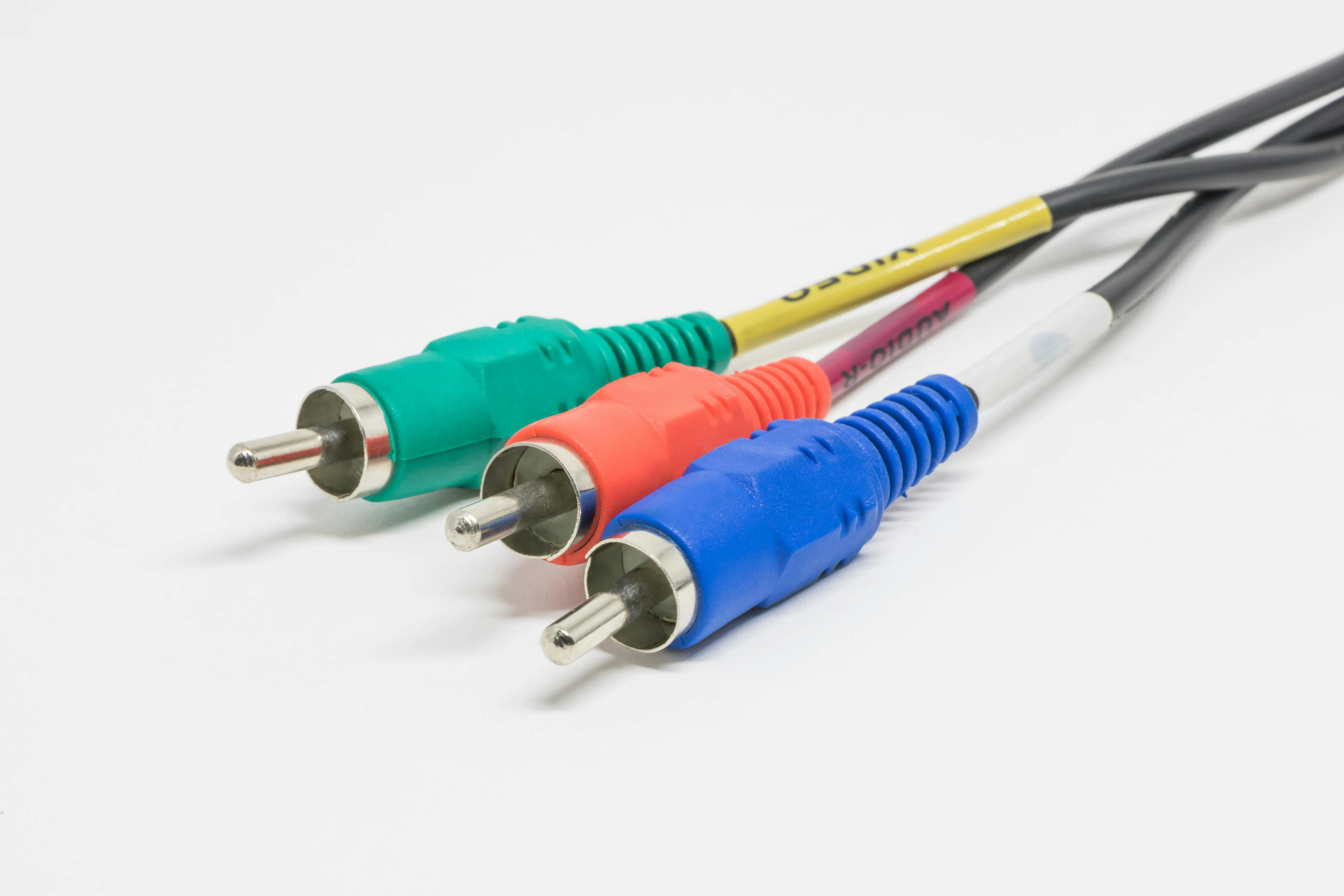
RCA connectors still appear in legacy audio and video equipment and remain familiar in many consumer setups. XLR connectors are used in professional audio applications because they provide a robust physical connection and support balanced signals that resist noise. BNC connectors are common in broadcast, surveillance, and test equipment because they lock securely and perform well in signal-sensitive environments.
Although many systems now rely on digital formats, audio and video connectors still serve a broad range of needs. Compatibility remains a major factor, especially in facilities that integrate older equipment with newer hardware.
RF and Coaxial Connectors
Radio frequency and coaxial connectors support high-frequency signal transmission. These connectors often appear in telecommunications, broadcast systems, antennas, wireless infrastructure, and instrumentation. Their design helps preserve signal quality while reducing interference and signal loss.
Connectors like SMA, N-type, and F-type each serve different purposes. SMA connectors often support compact radio and wireless devices. N-type connectors work well in more rugged outdoor or industrial environments. F-type connectors commonly appear in cable television and broadband applications. The connector choice depends on factors such as frequency range, environmental exposure, and mounting requirements.
Precision matters in RF work. Even a small mismatch can degrade performance, so connector selection requires careful attention to technical requirements and installation conditions.
Circular Connectors
Circular connectors stand out for their shape, durability, and versatility. Manufacturers often use them in industrial equipment, transportation systems, aerospace applications, and medical devices because they perform well in harsh environments. Their round design supports secure mating and accommodates a variety of pin configurations.
Many circular connectors include threaded or push-pull locking mechanisms to prevent accidental separation. Some versions include environmental sealing to protect against dust or moisture. Others focus on compact design for systems that fit in spaces with limited space.
When engineers review cable assembly parts, circular connectors often enter the conversation because they combine mechanical strength with adaptable electrical performance. Their design makes them a strong option for assemblies that need long service life and a dependable connection under movement or vibration.
Rectangular Connectors
Rectangular connectors appear in systems that need multiple contacts in an organized footprint. You’ll find them in industrial controls, computing equipment, telecommunications hardware, and interface panels. Their shape makes them useful in applications where designers need to manage many connections in a structured way.
These connectors can support power, signals, or a mix of both. Some include locking hardware for added stability, while others focus on fast assembly and servicing. D-sub connectors serve as a familiar example and have supported computer and communication systems for decades. Although some legacy styles appear less often in new consumer products, rectangular connectors remain relevant in industrial and technical environments.
Their value often comes from density and versatility. They allow designers to organize numerous circuits without relying on multiple smaller connectors.
Environmental and Locking Features
Connector type matters, but added features matter too. A connector used outdoors or in a washdown environment often needs sealing against moisture and debris. A connector used in a moving machine may need a locking mechanism that holds firm under vibration. A connector used in medical or laboratory equipment may need quick mating, secure retention, and clean handling.
That’s why connector selection often goes beyond shape alone. Materials, plating, shielding, strain relief, and housing design all contribute to long-term performance. Gold-plated contacts may help where corrosion resistance matters. Shielded designs help protect sensitive signals. Strain relief reduces stress at the cable entry point and can extend service life.
A connector may look like a small part of a larger assembly, yet its design can affect maintenance intervals, system reliability, and user confidence.
Matching the Connector to the Job
The best connector depends on how and where the cable will be used. A home office monitor setup needs something very different from a robotic assembly line or a field communication system. Current load, data speed, space limits, exposure conditions, and service expectations all shape the right choice.
Compatibility should always be the top priority in the decision. A connector must fit not only the cable but also the device, mounting style, and operating demands. Teams that choose solely on appearance or convenience often encounter problems later with fit, wear, or inconsistent performance.
That’s why it pays to think about the full application, not just the connection point. A connector works best when it supports the cable, the equipment, and the environment as a single, integrated system.
A Small Part With a Big Impact
Cable connectors may look simple from the outside, but they carry a lot of responsibility. They support power flow, data transfer, signal quality, and physical stability across almost every type of modern equipment. From USB and HDMI to circular and RF connectors, each style serves a specific purpose that can make or break system performance.
Once you understand the different types of cable connectors, it becomes easier to choose parts with confidence. A better connector choice can improve reliability, simplify maintenance, and help equipment perform the way it should from the start.